
Mob Menagerie: Axolotl
Published: May 1, 2025 - View official source
There are several things you’ll want to keep an eye out for when you’re sploshing around a lush caves biome. First are glow berries, which are both bright and edible. Second are dripleaf plants, which can act as redstone-powered platforms. But the most exciting of all are the only native denizens of this biome- axolotls!
These lil cuties are extremely fun to hang out with, but they are a bit fighty. They’ll attack most other aquatic creatures, including drowned but excluding turtles, dolphins, frogs and other axolotls.If you kill a creature that the axolotl is hostile to then you’ll be granted Regeneration and lose any Mining Fatigue.
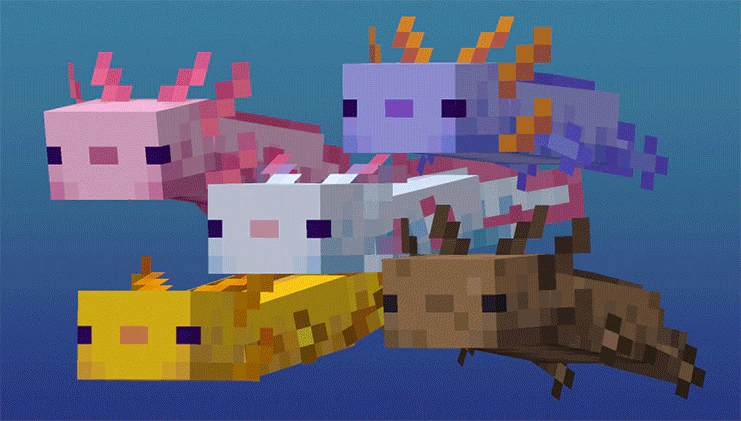
But we’re getting a bit ahead of ourselves here. Axolotls became a part of Minecraft in the first part of the Caves & Cliffs update in June 2021. As noted above, they spawn in lush cave biomes, around clay blocks underwater, and come in five different colors – blue, cyan, gold, wild (brown), and leucistic (pink).
Leucistic creatures, in case you’ve never seen that word before, are those which have lost the natural pigmentation in their skin, hair or scales, making them appear pale or white. Leucistic axolotls are very rare in the wild (because they’re easy for predators to spot and eat) but they’re common in captivity.
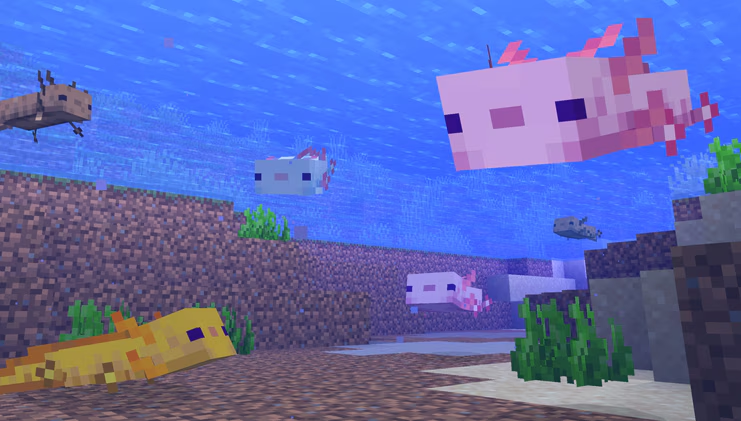
Axolotls are one of the few Minecraft mobs that can exist happily both in water and on land, but they do need to return to water periodically or they’ll die. To transport an axolotl long distances, you’ll need to pop it into a bucket, where it’ll happily hang out for as long as you like.
When attacked, they sometimes play dead – dropping to the ground and regenerating their wounds. To breed axolotls, you’ll need their favourite food – tropical fish (which also need to be transported in a bucket). A baby will almost always inherit the colours of one of its parents, but there’s a tiny chance it’ll be born as the rare blue variant. So if you get one of those, you can consider yourself very lucky indeed.
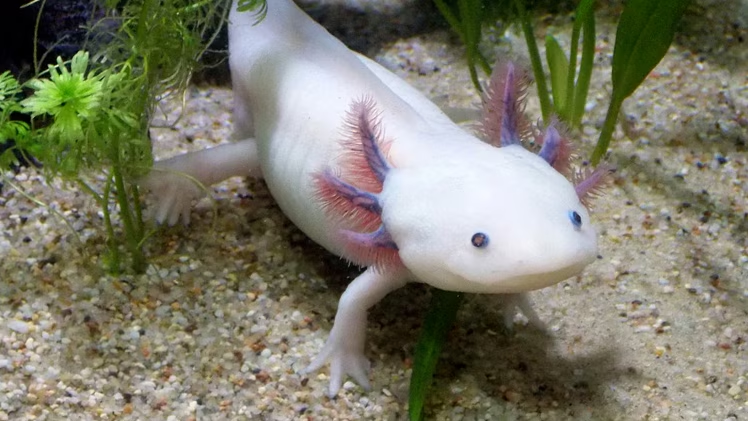
Unfortunately, real-world axolotls have not been very lucky. They’re native to the lakes that once surrounded Mexico City, but when Spanish settlers drained those lakes after the conquest of the Aztec Empire, they destroyed almost all of the creature’s natural habitat.
As a result, they’re now critically endangered – only known to exist in the wild in a few canals in Mexico, with a population somewhere between 50 and 1,000 individuals. Nonetheless, they’re sometimes kept as exotic pets, and are popular in scientific research due to their ability to regenerate parts of their body.
They’re also popular in Mexican culture, being named after the Aztec god Xolotl, who transformed into an axolotl to avoid being sacrificed by other gods. Mexico released a banknote in 2021 featuring an axolotl, and there’s also a star named after the species, which can be found in the constellation of Cetus.
So next time you’re paddling through a lush cave, be sure to keep a bucket handy. You might find a new friend!