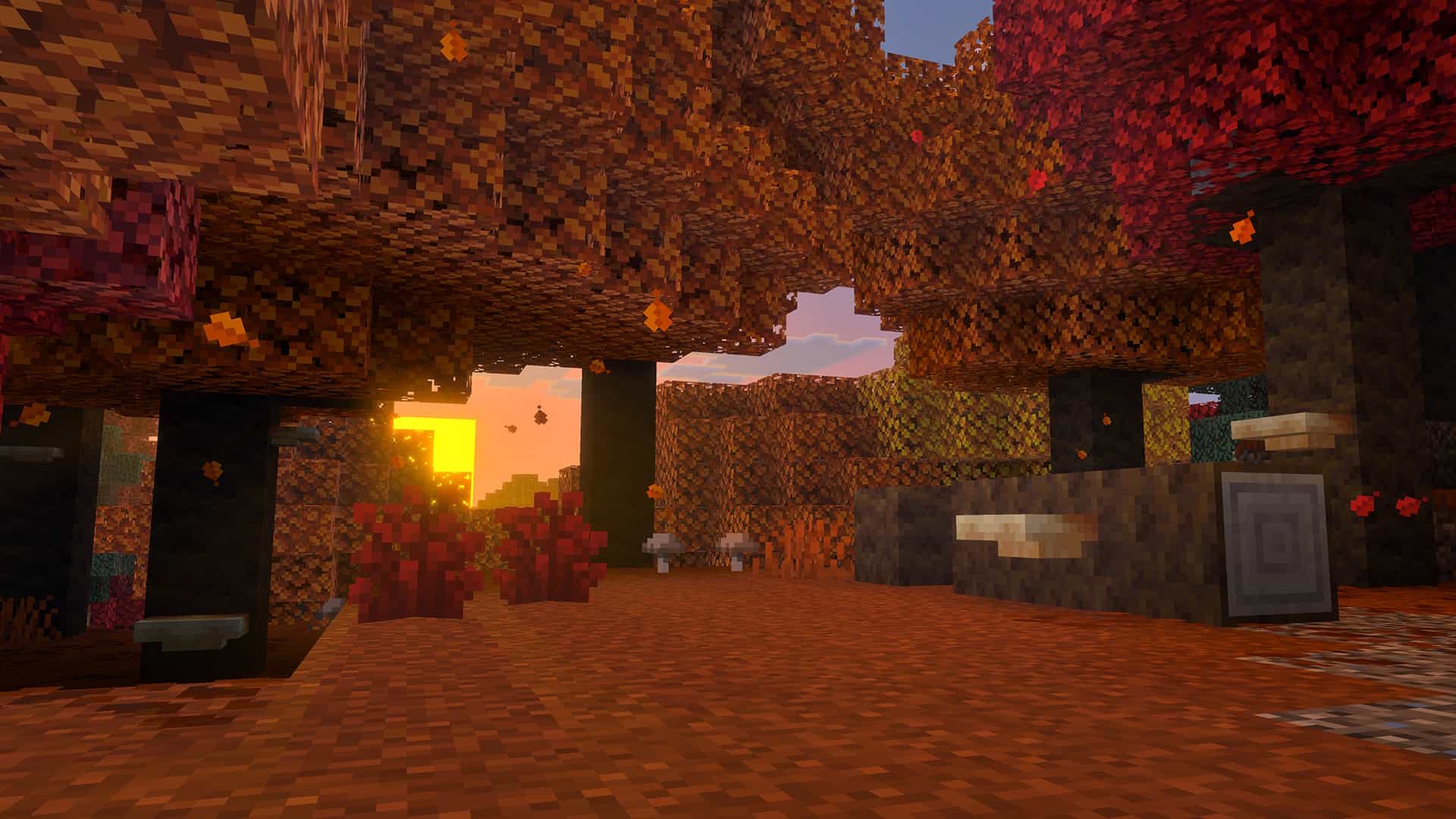
Did you know that our Sift-braving, loot-piling, action-RPG Minecraft Dungeons II is finally out? Meanwhile, the Dungeons II soundtrack has also joined the adventure on Spotify and other music platforms. What better way to celebrate than with a chat with the man behind the songs – Audio Director Peter Hont? Before you head over to your preferred music platform for your much-needed dose of earworms, why not learn more about what makes Dungeons sound like… well, Dungeons?
"A Dungeons song can be summarized as ‘Super Nintendo + PlayStation-era music with a modern polish'," says Peter Hont. "It should also feel like over-the-top MIDI to the point of being pretentious and silly. A good example of that is our Opening Cinematic from the first game, which aimed to balance the sound of an orchestra the size of Brahms's Requiem with an arrangement leaning more towards a Super Nintendo JRPG."
As the main composer since the very first Dungeons experience, Peter knows its universe like the back of his hand. But do you know Peter? Chances are that you'll recognize his work from tracks like 'Dalarna' or 'Broken Heart of Ender', so he of all people should know how to write a symphonic banger that can end up getting remixed for other games.
"I usually start with the basic structure on a keyboard instrument. When I'm 70% done with the chord progression, motifs, and structure that I like, I usually get too eager to start trying it out with different instruments before writing the remaining parts of the song. In Minecraft Dungeons II, I also tried to tie back to ideas and motifs from the first game, mostly because I thought it'd be fun to create that narrative while giving myself a creative puzzle to solve!"
EVOLVING THE DUNGEONS IDENTITY
Sticking to a distinctive sound doesn’t mean that Dungeons II plays by the same rules as the first Dungeons. The sequel still needed to sound like Dungeons, but with separate missions giving way to a vast, interconnected world, the music also needed to behave differently than its predecessor!
"In the previous game, we had a predictable game loop where a player went from the camp to mission select, then onward to the mission itself before eventually returning to the camp. In Dungeons II, however, I had to make sure the tracks belonged to a world rather than levels, and make the music more reactive."
Because of how much more dynamic Dungeons II is compared to its older sibling, Peter had to produce more than 200 tracks, including variants and layers needed for the game. This included changing tracks based on time of day and location, different musical layers depending on the player’s proximity to mobs or sculk in the Overworld, and seamless musical transitions in and out of cutscenes.
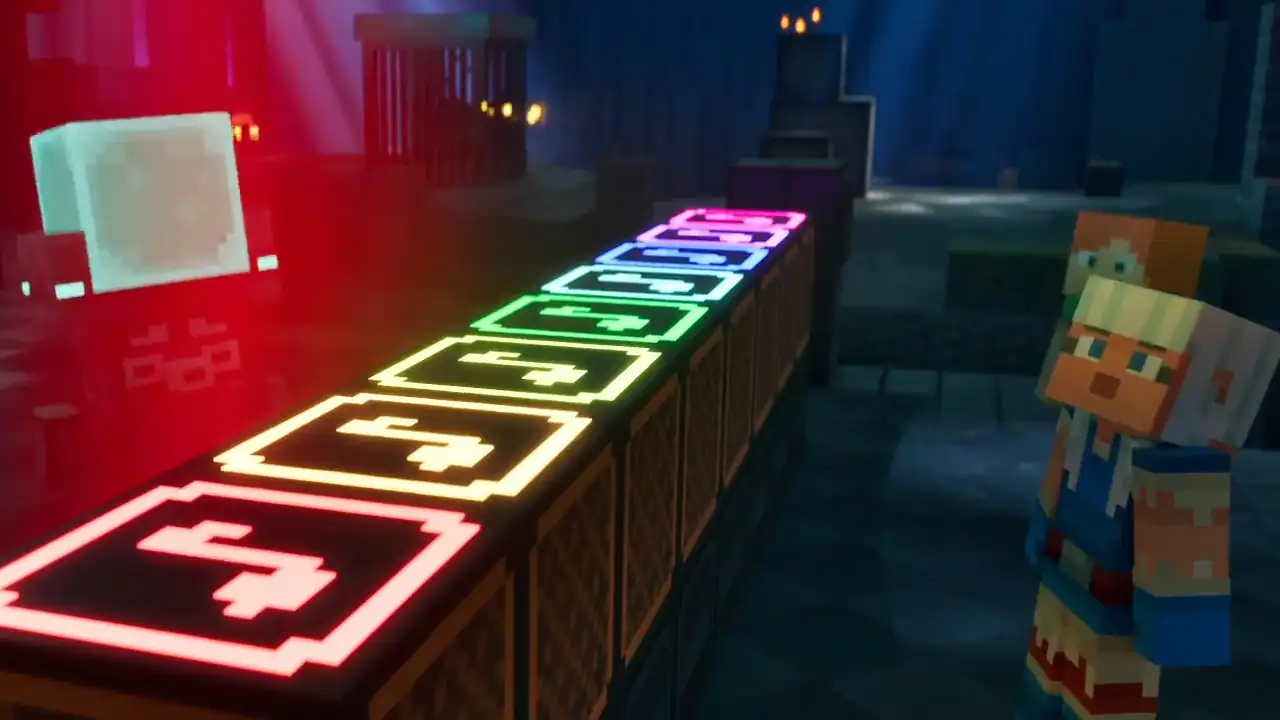
A tritone is a musical interval that can resolve in two different directions, leading to musical keys that are polar opposites. Peter used this to make the deep dark portal’s melody mirror the journey into the Sift: the music crosses into the new dimension’s key as the player crosses into its world. "In hindsight I'm happy I used this idea of musical transitions in so many places [throughout the game]. Having a narrative purpose is truly one of those happy accidents that I will carry with me for many years to come."
"I think that in and of itself makes the game sound more up to date with modern standards. I could also have gone down the path of recording a live orchestra which would have been insanely fun for me personally. However, I also wanted to focus on what made Dungeons unique, which is why I decided to dive deeper into that ‘mid-'90s video games with a modern polish’ approach. Think King Arthur's World meets Magicka 2 and TUNIC."
Dynamic behavior was only part of the challenge – the music also had to move between the world’s sillier moments and its more sincere ones. For example, writing a slightly pretentious orchestral track for the illagers can be interpreted as both silly and grand, while calmer moments – like visiting a town or hanging out in the main menu – can feel genuine and honest. "Then there are songs that combine the two, like the Song of Healing, which I hope will evoke a feeling of mystery and beauty, only to drastically contrast that with the almost disgusting sounds the singer makes. It can make it feel both silly and serene."
THE SOUND OF THE SIFT
Finding the balance between silly and sincere was one thing. Finding a musical identity for an entire dimension – the first one in almost 15 years at that? No pressure, Peter!
"I knew that the Sift would have a massive impact on the soundtrack and that I would have to find an idea and theme that could be reused in many different contexts beyond just Minecraft Dungeons," he explains. "I also wanted to find a new family of instruments that could represent this new dimension in the same way the piano defines the Overworld, or lava-filled ambience defines the Nether."
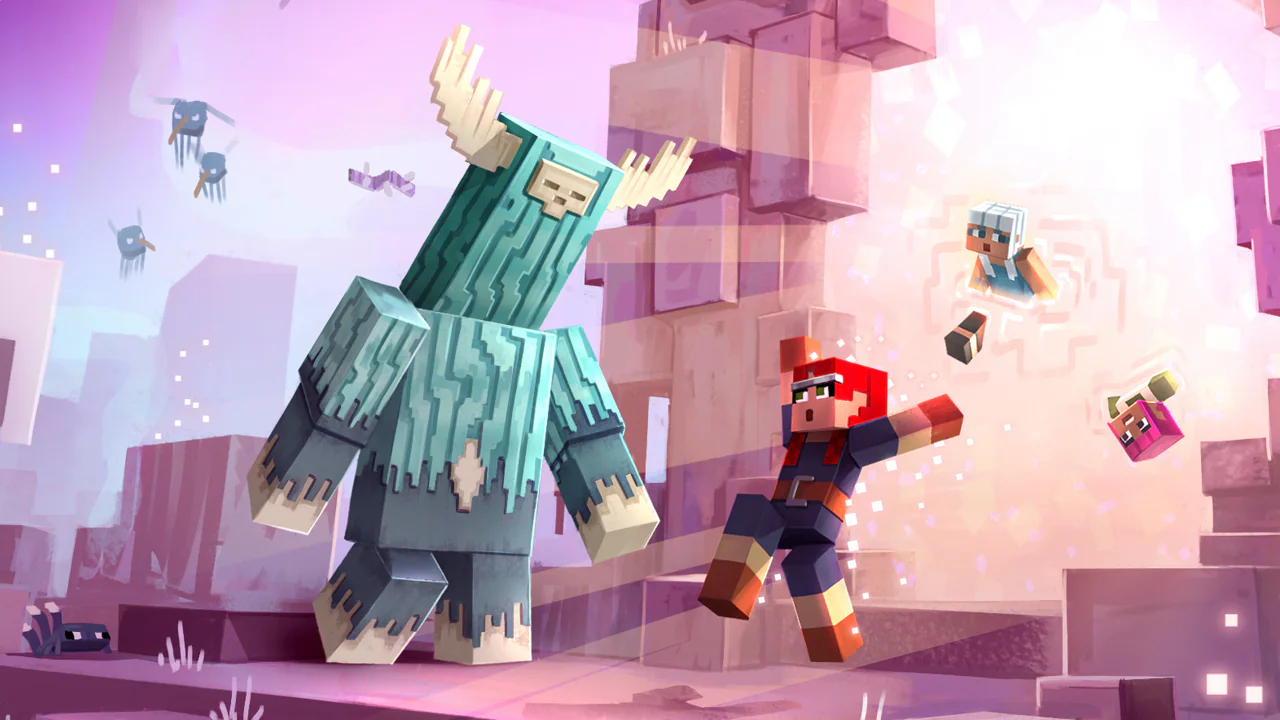
Minecraft Dungeons can be both ugly and cute – something reflected in the singers, who sings a sincere, melancholic melody with a rather... interesting voice. Concept art by Mariana Salimena Pires.
As Peter began exploring his options, he turned to wind and plucked string instruments. The instruments also needed to be versatile enough to be used for both chords and melodies. Peter experimented with harmonium and pipe organ, but neither quite had what he was looking for. The Sift needed something a bit more energetic.
"I can't remember how, but I somehow found my way to the harpejji, an instrument that sounds like a combination of a piano and a guitar. The harpejji, prepared piano, and other tonal percussion combine the playstyle of a piano with the sound of instruments that almost feel like vanilla Minecraft."
The harpejji helped shape the Sift’s sound. A guitar recording for the track 'Wellspring' would take that exploration in an unexpected direction.
“I sent a mockup version of the song over to Pontus Fällman and Gabriel Holmertz for them to try a guitar recording on their end. What I got back wasn't just their beautiful playing, but also a first version where instead of the harpejji playing the melody, they used a lap steel. That sparked the idea for what I would later record and use as the ‘soul sound’ of the game, heard in everything from Press Any Key to boss fights throughout.”
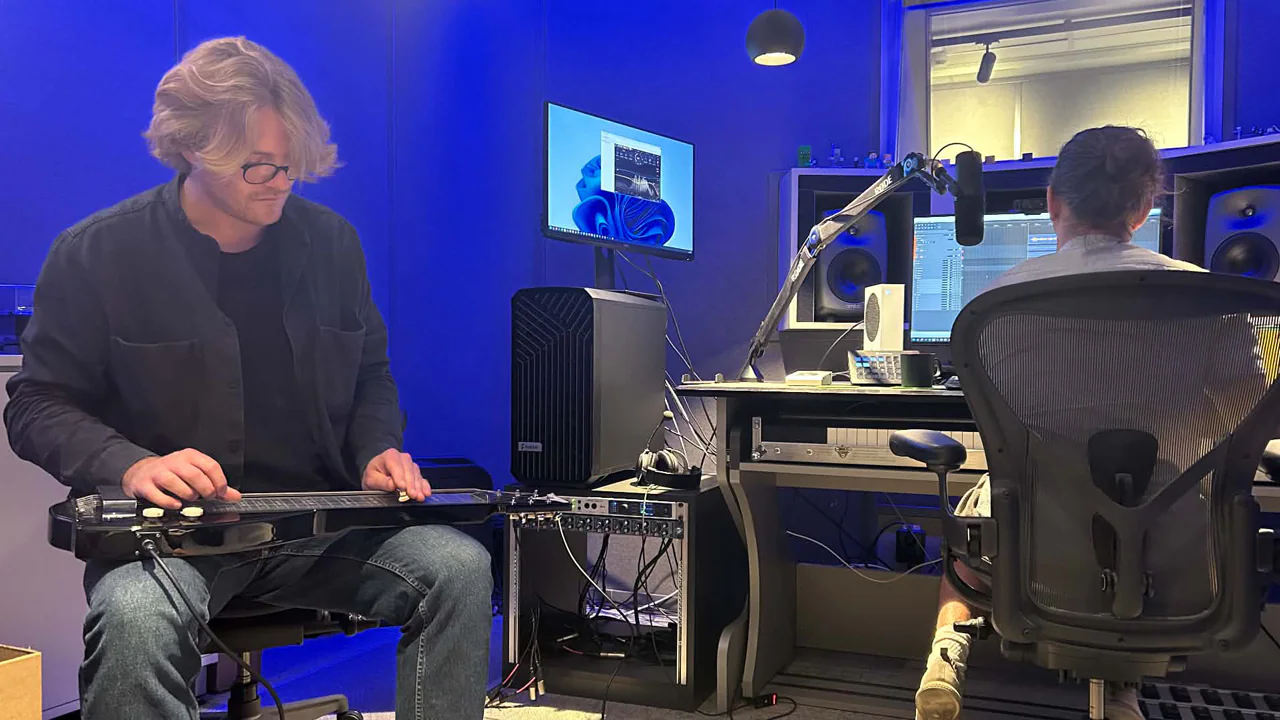
Gabriel Holmertz performing ‘Dalarna’ on the lap steel while Peter Hont oversees the recording.
The result gives the Sift a character of its own. While this game’s version of the Overworld builds on the familiar sound of Dungeons, the new dimension ventures into what Peter describes as 'psychedelic retro sci-fi with a hint of fantasy'. Sounds like one interesting stew (and what a sound it is)! Maybe I should trade my guitar for a lap steel?
KEEP AN EAR OUT!
If you haven't yet experienced the Sift – or Minecraft Dungeons II and its music – now is the time to don the hero's mantle and brave the unknown! Regardless of what you pick first, Peter’s biggest hope is that the music will make you stop and listen – closely...
"I hope at least one player listens closely to the music in a way they might not usually do. Most Minecraft players I have seen looking for clues or easter eggs in the sound and music usually look for them in a spectrogram or similar. This time, they might have to look elsewhere. Maybe they'll find something if they keep an ear out for something yet to be discovered? Speaking of listening closely, I want to take the opportunity to thank Jett Galindo for mastering the soundtrack. She really took it to another level!”
A suitably mysterious answer! Are you ready to lend Peter your ears? The Minecraft Dungeons II soundtrack is out now on your music platform of choice, so revisit a favorite track, explore the sounds of the Sift, or simply enjoy the music without any pesky illagers interrupting!