
Taking Inventory: Torchflower
Published: June 27, 2024 - View official source
OK people, you can all stop working – I’ve completed the definitive tier list of all of Minecraft’s flowers. An F rating goes to the azure bluet, which is neither azure nor blue. The peony is D-tier. Honestly, I’m still fairly certain a peony is supposed to be a horse. C-tier are the tulips and lilacs – fine but unremarkable. In the B-tier are alliums, wither roses, and cornflowers.
Moving up to the A-tier, we have beautiful blue orchids, oxeye daisies, dandelions, sunflowers, and poppies, as well as the gorgeous lily of the valley. Which leaves a single entrant at the top, in the S-tier. It’s the ancient and mysterious torchflower, and it’s so wonderful that I’m naming it my Minecraft item of the month.
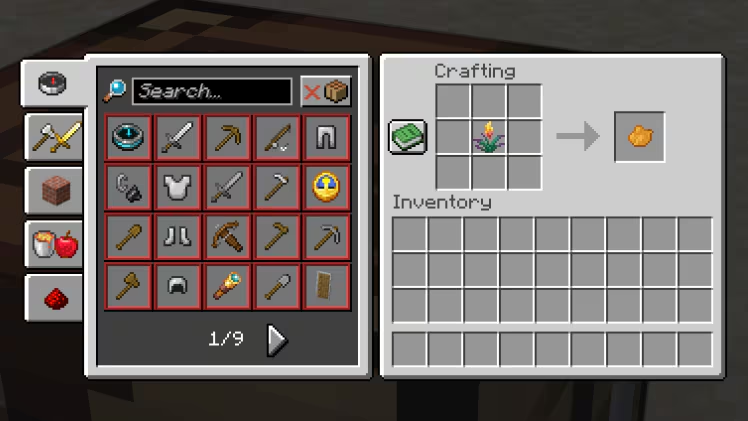
Torchflowers were first discovered in the Overworld following the Trails & Tales update in June 2023. Crucially, this update added sniffers, which can be hatched if you dig up one of their eggs during an archeological expedition – and it’s one of these sniffers that you’ll need to recruit if you want a garden full of torchflowers.
Sniffers, as their name suggests, have powerful noses – powerful enough to sniff out ancient seeds in the dirt. Every time they catch the scent of something, they’ll dig their nose into the ground until they unearth either a pitcher pod or a torchflower seed.
Once planted in dirt, torchflower seeds will slowly grow into torchflowers, and those torchflowers can then be crafted into orange dye, used to pollinate and breed bees, or crafted alongside mushrooms and a bowl into a suspicious stew that grants the night vision effect for 6-8 seconds. Very handy!
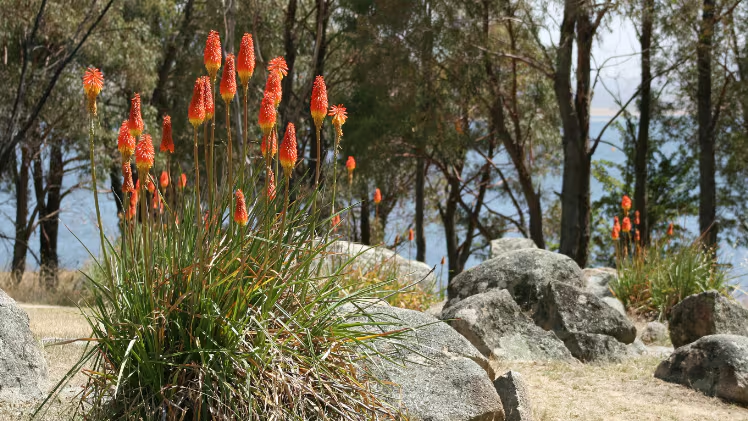
Image credit: Toby Hudson // CC BY-SA 3.0

The idea of finding an ancient seed in the dirt and growing it into a living plant might seem like something out of a fairytale, but it happens in the real world too! In 2012, National Geographic reported that a Russian team successfully grew a plant from a seed that had been frozen in ice for 32,000 years.
The plant that they grew, Silene stenophylla, doesn’t look much like a Minecraft torchflower. Instead, the flower is more likely inspired by a genus of African flowering plants called Kniphofia (seen in the picture above), which have the same tall red, orange and yellow flowers that the Minecraft version does, and are sometimes referred to as “torch lilies”.
But the principle of freezing seeds to preserve them is an important one – used most notably in the seed vault on the Arctic island of Svalbard. So next time you’ve got some precious seeds that you don’t want to lose, consider finding a tundra biome and burying them in a chest there. Maybe a Minecraft player thousands of years in the future will dig them up and thank you for it.