Redstone Update
Redstone Update expanded redstone into a much more capable automation system. It released for Java Edition 1.5 on March 13, 2013.
Redstone and Automation
Item Transport
 Hopper
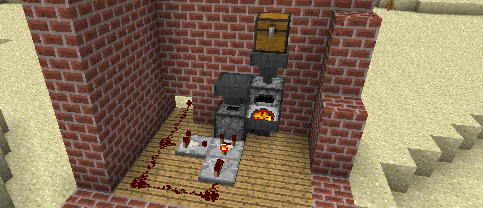
Hoppers collect items and transfer them between inventories.  Droppers move items into an adjoining container or release them as items, opening new possibilities for storage, sorting, and transport.
Signals and Inputs
- Comparators read container fullness and compare or subtract redstone signals.
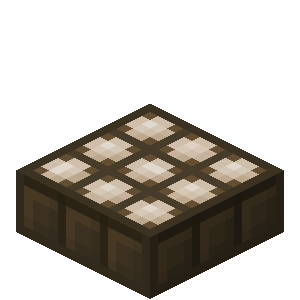 Daylight Detectors turn the light cycle into a redstone input.
- Trapped Chests send a signal while opened.
- Weighted Pressure Plates provide a signal based on the entities resting on them.
- Blocks of Redstone provide constant power and can be moved by Pistons.
These components made compact circuits possible that previously needed more elaborate arrangements or could not be built with existing blocks.
Blocks and Building
Nether Quartz
Nether Quartz Ore
Nether Quartz Ore added a reason to mine through Netherrack. Its Quartz supported both new redstone components and a pale decorative block set, including normal, Chiseled, and Pillar Quartz forms with Stairs and Slabs.
Mapmaking
Scoreboards
The Scoreboard system gave creators a way to track objectives, display scores, and organize players into teams. It helped commands respond to a player’s progress instead of relying only on physical redstone state.
Resource Customization
The texture-pack format changed from a combined sheet toward separate files for individual textures. This made individual block and item artwork easier to customize and prepared the way for the broader Resource Pack system introduced in the Horse Update.
Gallery
Official Artwork